

Karpenter 1.15 node repair: replace-first, until the pool is full
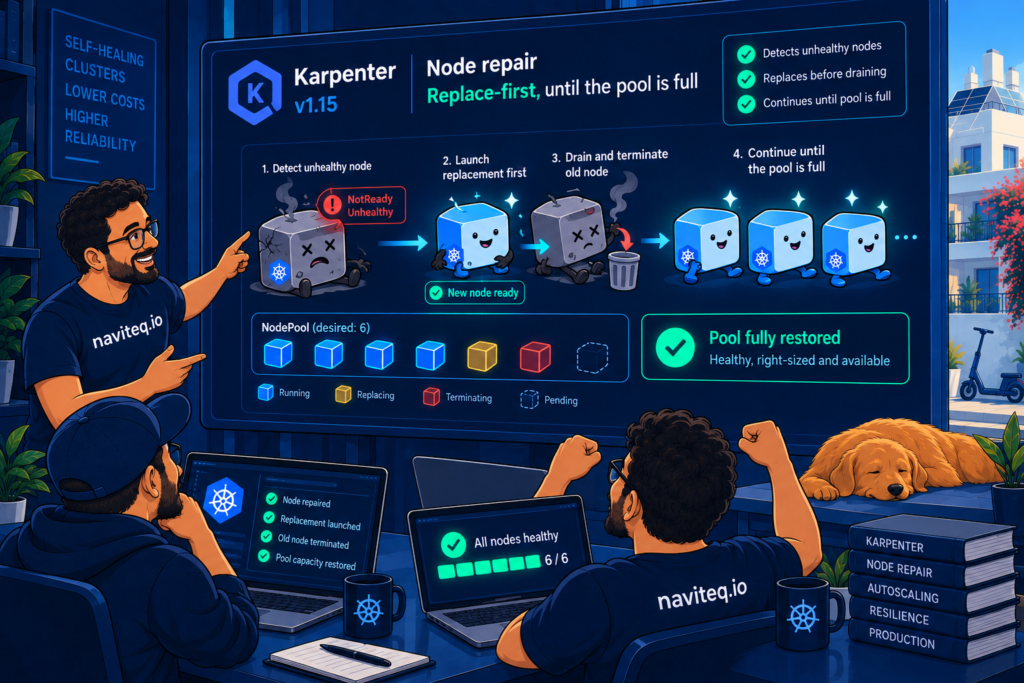
Karpenter 1.15 moves node repair onto the voluntary disruption path, so repair now respects budgets, launches a replacement first and caps the drain. That holds until a NodePool has no room to grow. What changes in your budgets on upgrade, what terminate-first costs on a full reservation, why the 20% breaker is still in the code, and the alerts we would add.
EKS lets the pod bring its own ECR identity. The node still decides.
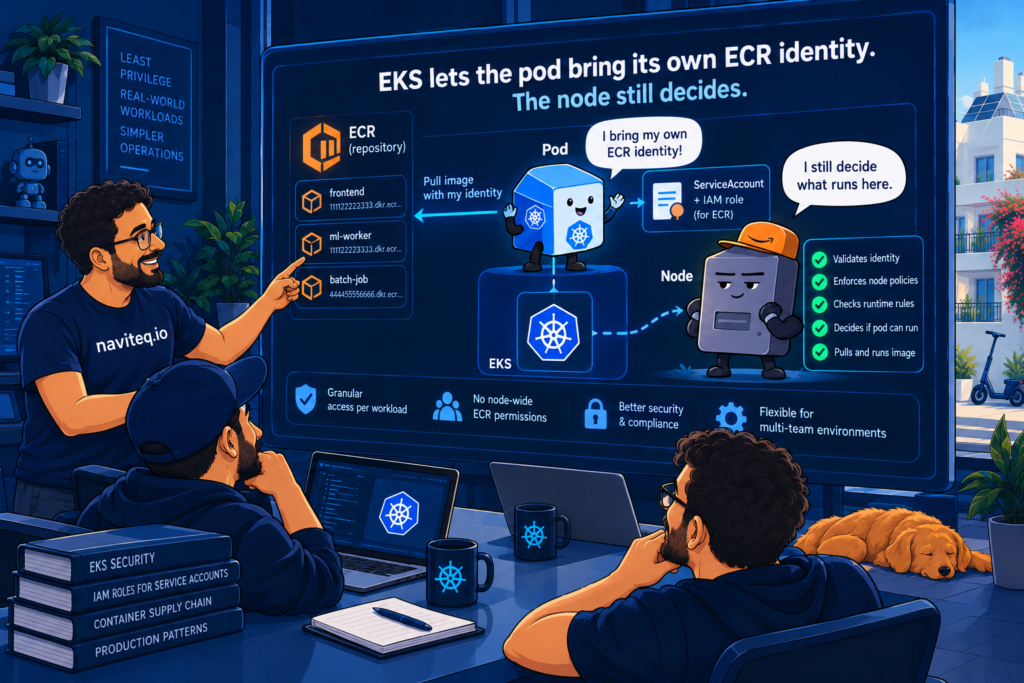
Since EKS 1.35, a pod can pull from ECR with its own IAM role instead of the node’s. Rolling it out means choosing between a fallback that leaves isolation optional and a deny that breaks every workload nobody annotated, and images already on the node are part of that choice.
Terraform Policy is GA. The stage a policy runs at is not a setting.
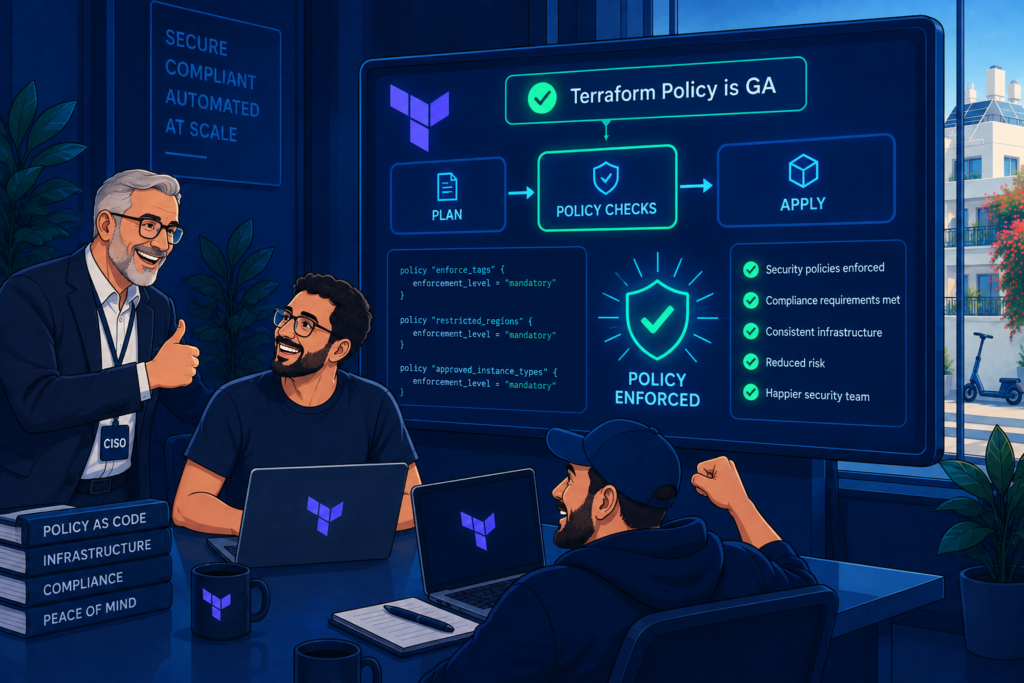
Terraform Policy went generally available on 9 September. The attribute your condition reads decides whether a policy blocks a deployment or only reports on it afterwards, and the two versions look identical in review.
ECS will call a deploy successful before it finishes. Decide what your pipeline should believe.
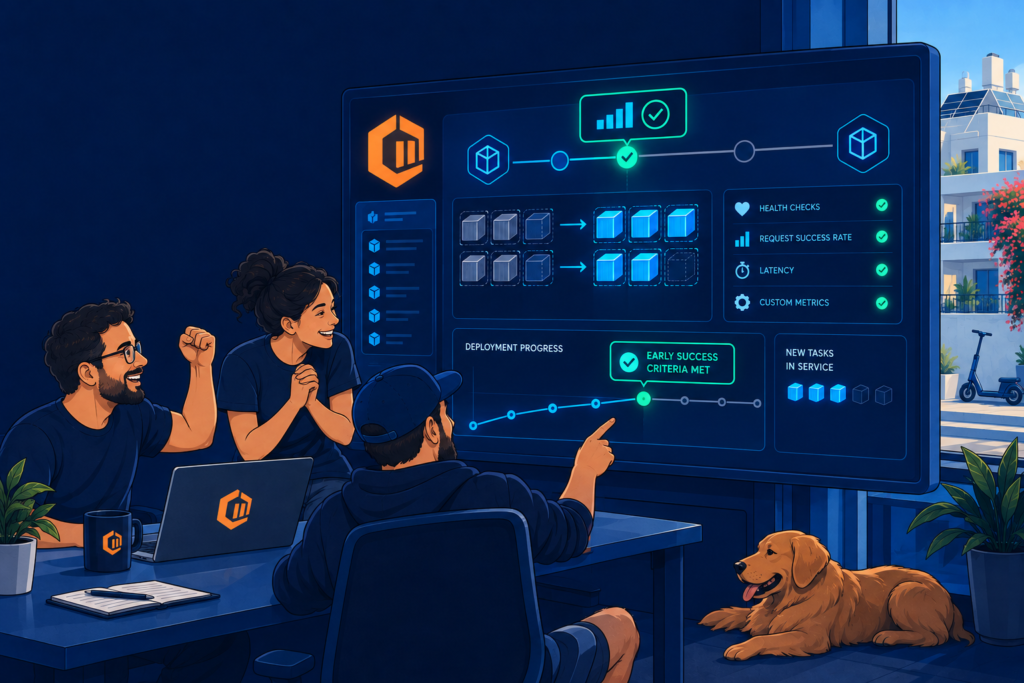
Amazon ECS Early Success Criteria lets you declare a rolling deployment successful at a task percentage you choose. The same percentage is where the circuit breaker stops protecting you, which makes it a harder number to pick than it looks.
Terraform 1.16: import blocks finally work inside modules
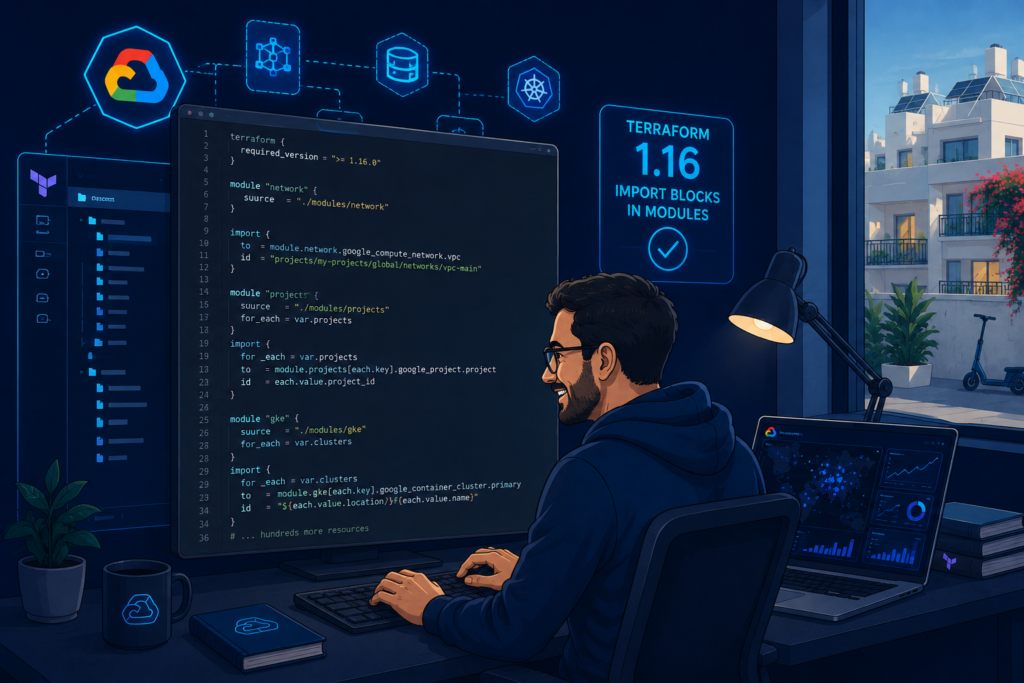
Terraform 1.16 lets an import block live inside a child module, so a module can carry the logic that adopts the infrastructure it describes. The before and after configuration, the discovery workflow, the release direction with destroy = false, and where OpenTofu still differs.
EKS opened up the scheduler. MostAllocated is the one with a bill attached.

Amazon EKS now lets you set four control plane parameters directly, including the scheduler scoring strategy. Switching from LeastAllocated to MostAllocated packs pods onto fewer nodes and cuts compute spend. The payloads, the resource weights, and the trade-offs that are hard to undo.
Sharing a GPU on EKS: time-slicing, MPS, MIG and DRA

A GPU is billed whole and used in fractions, and Kubernetes gives you four ways to divide one. Time-slicing, MPS, MIG and DRA on Amazon EKS, with the working config for each and the question that decides between them: what does this mechanism actually isolate?
Ingress-NGINX is retired: what breaks on the way to Gateway API

Ingress-NGINX stopped receiving security patches in March 2026, so the move to Gateway API is now scheduled work. The conversion tools handle the syntax. This walks through the five ingress-nginx behaviours that survive the translation as silent outages, and the config that preserves each one.
In-place pod resize is GA: rightsizing without the restart

Kubernetes 1.35 made in-place pod resize stable, so CPU and memory on a running pod can change without an eviction. We walk through the config, the pending state that trips up automation, and the workloads this still does not cover.